...

What We Think

Blog

Keep up with the latest in technological advancements and business strategies, with thought leadership articles contributed by our staff.
TECH

November 28, 2025

10 JavaScript Tricks to Level Up Your Code!

Looking to level up your JavaScript coding skills? Whether you're a beginner just starting out or a seasoned pro with years of experience, there's always room for improvement. JavaScript is a dynamic and ever-evolving language, and mastering it means constantly discovering new techniques, shortcuts, and best practices. In this post, we’ll unveil 10 powerful JavaScript tricks that can supercharge your skills and help you code like a professional. Whether you’re just starting or looking to level up, these tips will sharpen your problem-solving skills, improve your code efficiency, and make your journey as a developer smoother.. Ready to learn something new? Let’s dive in!

I. Object and Array Destructuring

Destructuring in JavaScript is a convenient way to extract values from arrays or objects and assign them to variables in a more readable and concise manner. It helps you avoid repetitive code when accessing values, making your code cleaner and more efficient.
 
  • Array Destructuring: Array destructuring allows you to unpack values from an array and assign them to variables.
Here's an example:
    const numbers = [10, 20, 30, 40];

    // Without destructuring:
    const first = numbers[0];
    const second = numbers[1];

    // With destructuring:
    const [first, second] = numbers;

    console.log(first);  // 10
    console.log(second); // 20
 
  • Object Destructuring: With object destructuring, you can extract specific properties from an object and assign them to variables.
Here's an example:
    const person = { name: "Alice", age: 25 };

    // Without destructuring:
    const name = person.name;
    const age = person.age;

    // With destructuring:
    const { name, age } = person;

    console.log(name); // Alice
    console.log(age);  // 25

II. Spread operator

The spread operator (...) in JavaScript is a powerful and versatile feature that allows you to "spread" the elements of an array or object into individual elements or properties. It can be used in multiple scenarios to copy, combine, or manipulate arrays and objects more efficiently. The spread operator is particularly useful for working with iterable data structures like arrays and objects.
 
  • Array Spread: The spread operator can be used to copy elements from one array to another or to combine multiple arrays.
Copying an array:
    const arr1 = [1, 2, 3];
    const arr2 = [...arr1];  // Spread arr1 into arr2

    console.log(arr2);  // [1, 2, 3]
 
Combining arrays:
    const arr1 = [1, 2, 3];
    const arr2 = [4, 5, 6];
    const combined = [...arr1, ...arr2];
    console.log(combined);  // [1, 2, 3, 4, 5, 6]
 
Adding new elements to an array:
    const arr1 = [1, 2, 3];
    const newArr = [...arr1, 4, 5];
    console.log(newArr);  // [1, 2, 3, 4, 5]
 
  • Object Spread: The spread operator can also be used to copy the properties of one object to another or to merge multiple objects.
Copying an object:
    const person = { name: "Alice", age: 25 };
    const personCopy = { ...person };

    console.log(personCopy);  // { name: "Alice", age: 25 }
 
Merging objects:
    const person = { name: "Alice", age: 25 };
    const job = { title: "Developer", company: "XYZ Corp" };
    const merged = { ...person, ...job };

    console.log(merged);  
    //Output: { name: "Alice", age: 25, title: "Developer", company: "XYZ Corp" }
 
Overriding object properties:
    const person = { name: "Alice", age: 25 };
    const updatedPerson = { ...person, age: 26 };

    console.log(updatedPerson);  // { name: "Alice", age: 26 }
 
Using the Spread Operator with Function Arguments:
You can also use the spread operator to pass an array of elements as individual arguments to a function.
    // Create a function to multiply three items
    function multiply(a, b, c) {
        return a * b * c
    }

    // Without spread operator
    multiply(1, 2, 3) ;// 6

    // With spread operator
    const numbers = [1, 2, 3]
    multiply(...numbers);//6

III. Rest parameter

Rest Parameters (...) in JavaScript allow you to collect multiple function arguments into a single array, enabling more flexible and dynamic function definitions. Unlike the spread operator, which expands arrays or objects into individual elements, rest parameters "collect" individual arguments into an array.
    function restTest(...args) {
        console.log(args)
    }

    restTest(1, 2, 3, 4, 5, 6);// [1, 2, 3, 4, 5, 6]

    // Rest Parameters with Other Parameters
    function displayInfo(name, age, ...hobbies) {
        console.log(`Name: ${name}, Age: ${age}`);
        console.log(`Hobbies: ${hobbies.join(", ")}`);
    }

    displayInfo("Alice", 30, "Reading", "Swimming", "Hiking");
    // Output:
    // Name: Alice, Age: 30
    // Hobbies: Reading, Swimming, Hiking

IV. Template Literals (``)

Template Literals, introduced in JavaScript (ES6), are a modern way to create strings. Allows for embedding expressions inside strings using backticks (). Supports multi-line strings without special characters and makes string concatenation much cleaner.
    const greeting = `Hello, ${name}!
    Welcome to the next line.`;
    console.log(greeting);
    // Output:
    // Hello, Bob!
    // Welcome to the next line.

V. Arrow Functions (=>)

Offer a more concise syntax for writing function expressions. Crucially, they do not bind their own this, arguments, super, or new.target. Their this value is lexically bound (it's the this value of the enclosing execution context).
    // Traditional function
    const add = function(a, b) {
        return a + b;
    };

    // Arrow function (single expression, implicit return)
    const addArrow = (a, b) => a + b;

    // Arrow function (multiple statements, explicit return)
    const multiply = (a, b) => {
        const result = a * b;
        return result;
    };

VI. Ternary Operator (?:)

A shorthand for simple if...else statements. It's ideal for conditional assignments or returning values based on a condition.
    const age = 20;
    const status = age >= 18 ? "Adult" : "Minor";
    console.log(status); // "Adult"

VII. Nullish Coalescing Operator (??)

The Nullish Coalescing Operator (??) in JavaScript returns the right-hand value only if the left-hand value is null or undefined.
    // Syntax
    let result = a ?? b;
    - If a is not null or undefined, result will be a.
    - If a is null or undefined, result will be b.

    // Example
    let username = null;
    let defaultName = "Guest";
   
    let nameToDisplay = username ?? defaultName;
    console.log(nameToDisplay); // "Guest"

VIII. Optional Chaining (?.)

The Optional Chaining Operator (?.) in JavaScript lets you safely access deeply nested properties without having to check each level manually. If the value before ?. is null or undefined, the expression short-circuits and returns undefined instead of throwing an error.
    // Example
    const user = {
        profile: {
            name: "Alice",
        },
    };
   
    console.log(user.profile?.name);     // "Alice"
    console.log(user.settings?.theme);   // undefined (no error)


    const user = {
        greet() {
            return "Hello!";
        }
    };
   
    console.log(user.greet?.());      // "Hello!"
    console.log(user.sayBye?.());     // undefined (no error)

IX. Array Methods (map, filter, reduce, etc.)

Mastering built-in array methods is crucial for functional programming patterns and writing cleaner code compared to traditional for loops for many tasks.
//.map() – Transforms each element in an array
    const nums = [1, 2, 3];
    const squares = nums.map(n => n * n); // [1, 4, 9]
//.filter() – Filters elements based on a condition
    const nums = [1, 2, 3, 4];
    const evens = numbers.filter(num => num % 2 === 0); // [2, 4]

//.reduce() - Aggregates array elements into a single value
    const nums = [1, 2, 3, 4];
    const sum = nums.reduce((acc, cur) => acc + cur, 0); // 10

//.find() – Finds the first element that matches a condition
    const users = [{ id: 1 }, { id: 2 }];
    const user = users.find(u => u.id === 2); // { id: 2 }

//.some() – Returns true if any element matches
    const hasNegative = [1, -1, 3].some(n => n < 0); // true

//.every() – Returns true if all elements match
    const allPositive = [1, 2, 3].every(n => n > 0); // true

//.forEach() – Executes a function for each item (no return)
    [1, 2, 3].forEach(n => console.log(n * 2)); // 2, 4, 6

//.includes() – Checks for existence
    [1, 2, 3].includes(2); // true
Why Use Functional Array Methods?
Cleaner syntax with less boilerplate
Immutable patterns (avoiding side effects)
Better readability and expressiveness
Easier to compose operations
 

X. Using Set for Unique Values

The Set object allows you to store unique values of any type. It's a super-fast way to get a list of unique items from an array.
    const nums = [1, 2, 2, 3];
    const unique = [...new Set(nums)]; // [1, 2, 3]
 

XI. Conclusion

Hopefully, the 10 JavaScript tricks shared above will provide useful tips for your daily work. Applying them flexibly will lead to cleaner, more maintainable, and faster code. Don't hesitate to experiment with and incorporate these techniques into your future projects to truly feel the difference they can make.
Whether you need scalable software solutions, expert IT outsourcing, or a long-term development partner, ISB Vietnam is here to deliver. Let's build something great together-reach out to us today. Or click here to explore more ISB Vietnam's case studies.
View More
TECH

November 28, 2025

Managing Secrets in Spring Boot: A Guide to Secret Manager Integration

Have you ever accidentally committed an application.properties file containing a database password, API key, or other sensitive information to Git? This is one of the most common and dangerous security risks developers face.

"Hardcoding" (writing these sensitive values directly) in your code or configuration files is a bad practice. Fortunately, Spring Boot provides an excellent mechanism to integrate with Secret Manager systems, helping you store and retrieve this information securely.

What is a Secret Manager?

A Secret Manager is a specialized service (usually provided by cloud platforms) designed to store, manage, and control access to sensitive information like passwords, API keys, certificates, and other secrets used by applications. Instead of hardcoding these values in your code or configuration files, Secret Manager allows you to keep them in a secure, centralized place.

We will start with AWS Secret Manager to store the username and password for the database.

Step 1: Create a Secret on AWS

The best way to store multiple related values (like a database username and password) is to use the JSON format.

  • Access the AWS Management Console > Secrets Manager.
  • Click on "Store a new secret".
  • In the "Key/value pairs" section, enter your values as JSON. This is a very effective method.
  • Example: to store database information, you can configure it as follows:

JSON

{
    "spring_datasource_username": "db_admin_user",
    "spring_datasource_password": "MyS3cur3Password_From_AWS!"
}

Give the secret a name (e.g., production/database/credentials).
Tip: Use a hierarchical prefix (like production/ or my-app/) for easy management and permissions.

  • Click Next > Next and finally "Store".

Step 2: Configure Permissions (IAM)

Your Spring Boot application needs permission to read this secret.

On Production (EC2, ECS, EKS): You should create an IAM Role (e.g., MyWebAppRole), assign this Role to your service (e.g., assign it to the EC2 instance). Then, create a Policy to grant permissions to that Role.

JSON

{
     "Version": "2012-10-17",
    "Statement": [
        {
           "Effect": "Allow",
           "Action": "secretsmanager:GetSecretValue",
           "Resource": "arn:aws:secretsmanager:<region>:<account-id>:secret:<secret-name-prefix>*"
        }
    ]
}

Step 3: Update pom.xml (Spring Boot 3.x)

Add the Spring Cloud AWS BOM (Bill of Materials) to <dependencyManagement>:

XML

<dependency>
    <groupId>io.awspring.cloud</groupId>
    <artifactId>spring-cloud-aws-starter-secrets-manager</artifactId>
</dependency>

Step 4: Configure Spring Boot to "Import" Secrets

Properties

spring.config.import=aws-secretsmanager:demo?prefix=db
spring.datasource.writer.url=jdbc:${db.engine}://${db.host}:${db.port}/${db.dbname}
spring.datasource.writer.username=${db.username}
spring.datasource.writer.password=${db.password}
spring.datasource.writer.driver-class-name=com.mysql.cj.jdbc.Driver


Conclusion

You have successfully configured your Spring Boot application to dynamically read secrets from AWS Secrets Manager. This method is not only more secure but also much more flexible. When you need to rotate a password, you just need to update the value in AWS Secrets Manager; your application will automatically pick up the new value on its next startup without needing to rebuild or redeploy the code.

Whether you need scalable software solutions, expert IT outsourcing, or a long-term development partner, ISB Vietnam is here to deliver. Let’s build something great together—reach out to us today. Or click here to explore more ISB Vietnam's case studies.

[References]

View More
TECH

November 28, 2025

AOP Deep Dive: Separating Concerns.

As Object-Oriented Programming (OOP) developers, we are trained to build systems by encapsulating data and behavior into Objects. But there's a problem OOP doesn't solve cleanly.

Imagine you have 100 different service methods. In almost every single one, you find yourself writing the same boilerplate code:

  1. Log "Starting method..."
  2. Check user permissions (Security Check)
  3. Begin a Database Transaction
  4. try...catch block
  5. ...Execute the core business logic...
  6. finally block to Commit or Rollback the Transaction
  7. Log "Finished method..."

Your real business logic (step 5) is just a few lines, but it's "drowned" in a sea of repetitive boilerplate. This repetitive code is known as Cross-Cutting Concerns.

This is precisely the problem Aspect-Oriented Programming (AOP) was designed to solve.

What is AOP?

AOP is a programming paradigm that allows us to separate (or modularize) cross-cutting concerns from our main business logic.

Think of it this way:

  • OOP helps you slice your system vertically into classes and modules (like UserService, OrderService).
  • AOP helps you slice your system horizontally by grouping a single concern (like Logging) that cuts across all your modules.

By doing this, your UserService can focus only on user logic. It doesn't need to "know" that it's being logged, timed, or wrapped in a transaction.

The Core Terminology (The "Jargon" You Must Know)

To understand AOP, you must be fluent in its five core terms:

1. Aspect

  • What it is: The module or class that encapsulates a cross-cutting concern.
  • Example: A LoggingAspect, a TransactionManagementAspect, or a SecurityAspect.

2. Join Point

  • What it is: A specific point during the execution of your program where you could intervene.
  • Example: Before a method is called, after a method returns, or when an exception is thrown.

3. Pointcut

  • What it is: An expression or rule that selects one or more Join Points you want to target.
  • Example: "All public methods in the UserService class," or "All methods annotated with @Transactional."

4. Advice

  • What it is: This is the actual logic (the code) you want to execute at the Join Points selected by your Pointcut.

Common types of Advice:

  • @Before: Runs before the Join Point. (e.g., Log "Starting...").
  • @AfterReturning: Runs after the Join Point executes and returns successfully. (e.g., Log the result).
  • @AfterThrowing: Runs if the Join Point throws an exception. (e.g., Log the error, send an alert).
  • @After: Runs after the Join Point finishes, regardless of whether it was successful or threw an error (like a finally block).
  • @Around: The most powerful. It wraps the Join Point. You can run code before, decide whether to execute the Join Point at all, run code after, and even modify the return value. This is used for transactions, caching, and timing.

5. Weaving

  • What it is: The process where the AOP framework applies (or "weaves") the Advice to the targeted Pointcuts.

Simple Summary: You define an Advice (the 'what'—the logic). You use a Pointcut (the 'where'—the rule). You wrap them in an Aspect (the 'container'). The AOP framework performs Weaving (the 'how'—the application) to make it all work.

Practical Example: From "Messy" to "Clean"

Let's see how AOP cleans up our code.

1. Before AOP (The "Polluted" Code)

// Business logic is heavily "polluted" by logging and transaction code

public class OrderService {

    public void createOrder(Order order) {

        DatabaseConnection conn = null;

        Logger.log("Starting to create order for user: " + order.getUserId());

        try {

            conn = Database.getConnection();

            conn.beginTransaction(); // <-- Cross-Cutting Concern 1


            // ... Core business logic ...

            // (Check inventory, charge credit card, create order record...)

            // ...


            conn.commit(); // <-- Cross-Cutting Concern 1

            Logger.log("Order created successfully."); // <-- Cross-Cutting Concern 2


        } catch (Exception e) {

            if (conn != null) {

                conn.rollback(); // <-- Cross-Cutting Concern 1

            }

            Logger.error("Failed to create order: " + e.getMessage()); // <-- Cross-Cutting Concern 2

            throw new OrderCreationException("Error...", e);

        } finally {

            if (conn != null) {

                conn.close();

            }

        }

    }

}

The core logic (the // ... part) is buried.

2. After AOP (The "Clean" Code)

(This example uses syntax from Spring AOP / AspectJ, one of the most popular AOP implementations).

Step 1: The Business Logic (CLEAN):

// Just the business logic. Clean, readable, and easy to unit test.

public class OrderService {


    @Transactional // Declares "I need a transaction"

    @Loggable // Declares "I need to be logged"

    public void createOrder(Order order) {

        // ... Core business logic ...

        // (Check inventory, charge credit card, create order record...)

        // ...


        // No try-catch-finally, no logging. It's gone.

    }

}

Step 2: Define the Aspects (Where the logic went):

// Aspect 1: Handles Transactions

@Aspect

@Component

public class TransactionAspect {


    // An @Around Advice, wrapping any method marked with @Transactional

    @Around("@annotation(com.myapp.annotations.Transactional)")

    public Object manageTransaction(ProceedingJoinPoint joinPoint) throws Throwable {

        DatabaseConnection conn = null;

        try {

            conn = Database.getConnection();

            conn.beginTransaction();


            Object result = joinPoint.proceed(); // <-- This executes the real createOrder()


            conn.commit();

            return result;

        } catch (Exception e) {

            if (conn != null) conn.rollback();

            throw e; // Re-throw the exception

        } finally {

            if (conn != null) conn.close();

        }

    }

}


// Aspect 2: Handles Logging

@Aspect

@Component

public class LoggingAspect {


    @Around("@annotation(com.myapp.annotations.Loggable)")

    public Object logExecution(ProceedingJoinPoint joinPoint) throws Throwable {

        String methodName = joinPoint.getSignature().getName();

        Logger.log("Executing: " + methodName);

        long startTime = System.currentTimeMillis();


        try {

            Object result = joinPoint.proceed(); // <-- This executes the real createOrder()


            long timeTaken = System.currentTimeMillis() - startTime;

            Logger.log("Finished: " + methodName + ". Time taken: " + timeTaken + "ms");

            return result;

        } catch (Exception e) {

            Logger.error("Exception in: " + methodName + ". Error: " + e.getMessage());

            throw e;

        }

    }

}

How Does AOP Actually Work? (The "Magic" of Weaving)

This "magic" typically happens in one of two ways:

  1. Runtime Weaving:
    • The most common method, used by Spring AOP.
    • The framework does not modify your code. Instead, at runtime, it creates a Proxy Object that wraps your real object.
    • When you call orderService.createOrder(), you're actually calling orderServiceProxy.createOrder().
    • This proxy object executes the Aspect logic (@Around), and inside that, it calls your real object (joinPoint.proceed()).
  2. Compile-time Weaving:
    • Used by the full AspectJ framework.
    • This method modifies your compiled bytecode (the .class files) during or after compilation.
    • It literally "weaves" the advice code directly into your target methods.
    • Pro: Faster runtime performance (no proxy overhead).
    • Con: More complex build setup.

The Pros and Cons

Pros

  • Clean Code: Your business logic is pure and focused.
  • High Reusability: Write one LoggingAspect and apply it to 1,000 methods.
  • Easy Maintenance: Need to change your logging format? You only edit one file (the Aspect), not 1,000.
  • Enforces SRP: Your OrderService is now only responsible for one thing: managing orders.

Cons

  • "Black Magic": Code seems to execute "from nowhere." A new developer looking at createOrder() won't see how transactions or logs are handled immediately.
  • Debugging Hell: When an error occurs, the stack trace can be extremely long and confusing, filled with calls to proxies and aspect logic.
  • Performance Overhead: Creating and calling through proxies adds a small performance cost compared to a direct method call.

Conclusion

AOP is not a replacement for OOP. It is a powerful complement to OOP. It's the "secret sauce" behind many features in major frameworks like Spring (for @Transactional, @Secured) and Quarkus (for caching, metrics).

Use AOP wisely for true cross-cutting concerns. Don't abuse it, and make sure your team understands the "magic" that's happening behind the scenes.


Whether you need scalable software solutions, expert IT outsourcing, or a long-term development partner, ISB Vietnam is here to deliver. Let’s build something great together—reach out to us today. Or click here to explore more ISB Vietnam's case studies.


References:

View More
TECH

November 28, 2025

A Simple Guide to PCA Image Classification with Scikit-learn: Green vs Red Apples

In PCA image classification tasks, the input data is often high-dimensional, containing a large number of features. For example, a 64×64 RGB image consists of 3 color channels, resulting in 64 × 64 × 3 = 12,288 numerical pixel values. When we feed all 12,288 raw pixel values directly into traditional machine learning models, several issues typically arise:

View More
TECH

November 28, 2025

Java Streams Simplified with Examples

Working with collections in Java used to involve a lot of boilerplate code—loops, conditions, and temporary variables. But with the introduction of Java Streams, developers gained a powerful way to process data in a declarative, readable, and functional style.

View More
TECH

November 28, 2025

The Y2K38 problem: Why you should care

Have you heard about the Year 2038 problem? This time-related issue could affect many computer systems in the future. This is because it causes systems to process dates incorrectly, which can lead to errors, unpredictable behavior, system failures or data loss.

View More
TECH

November 28, 2025

Unit Testing with Vitest in Vue 3

In software development, writing unit tests is an effective technique for developers to ensure the quality of their source code. There are many popular testing frameworks, such as Cypress, Vitest, Jest, Mocha, etc. In this article, I will guide you through writing unit tests using Vitest, a modern framework that leverages the speed of Vite.

This guide will walk you through, step-by-step, how to write robust unit tests for quite common scenarios in a modern Vue 3 + TypeScript application: get data from API and fetching data to populate a table. Finally, we'll learn how to measure the effectiveness of our tests using Code Coverage.

Assume that we have a page that displays a list of users when opened. The data is fetched from an API.
During the data fetching process, a loading icon is displayed and is hidden once the data retrieval is complete.

The example source code is as follows:

The content of the component that displays the user list. To keep this article from being too long, you are free to define the CSS yourself.

src/components/UserTable.vue

<template>

  <div class="user-table-container">
    <h2>User List</h2>
    <divv-if="loading"class="loading-message">
      <div class="spinner"></div>
      <span>Loading users...</span> </div>
    <div v-if="error" class="error-message">
      <p>Error: {{ error }}</p>
      <p>Please try again later.</p>
    </div>
    <table v-if="users.length > 0" class="user-table">
      <thead>
        <tr>
          <th>ID</th>
          <th>Name</th>
          <th>Email</th>
        </tr>
      </thead>
      <tbody>
        <tr v-for="user in users" :key="user.id">
          <td>{{ user.id }}</td>
          <td>{{ user.name }}</td>
          <td>{{ user.email }}</td>
        </tr>
      </tbody>
    </table>
    <p v-else-if="!loading && !error" class="no-users-message">No users found.</p>
  </div>
</template>


<script setup lang="ts">
import { fetchUsers, type User } from '@/services/userService';
import { ref, onMounted } from 'vue';
 
const users = ref<User[]>([]);
const loading = ref(true);
const error = ref<string | null>(null);
 
onMounted(async () => {
  error.value = null;
  try {
    users.value = await fetchUsers();
  } catch (e: any) {
    error.value = e.message;
  } finally {
    loading.value = false;
  }
});
</script>
 
Here is the content for our data service. For this example, we will be using the public API from JSONPlaceholder.
src/services/userService.ts
export interface User {
  id: number;
  name: string;
  email: string;
}
 
export async function fetchUsers(): Promise<User[]> {
  const response = await fetch('https://jsonplaceholder.typicode.com/users');
  if (!response.ok) {
    throw new Error('Failed to fetch users from JSONPlaceholder');
  }
  return response.json();
}
 
Let's now begin writing the unit tests for our two source files, UserTable.vue and userService.ts.
 

Setting up the environment for unit testing

First, open your terminal and run the following command:
Bash
npm install -D vitest @vue/test-utils jsdom
 
Next, open your vite.config.ts file and add the configuration for Vitest:
vite.config.ts
import { defineConfig } from 'vitest/config'
import { fileURLToPath, URL } from 'node:url'
import vue from "@vitejs/plugin-vue";
 
export default defineConfig({
  plugins: [vue()],
  resolve: {
    alias: {
      '@': fileURLToPath(new URL('./src', import.meta.url))
    },
   },  
  test: {
    coverage: {
      reporter: ['text', 'json', 'html'],
    },
    globals: true,
    environment: 'jsdom',
  },
})
 
Next, add below test script to your package.json:
package.json
{
  "scripts": {
...................
...................
...................
    "test:unit": "vitest",
    "test:unit:coverage": "vitest run --coverage",
    "test:unit:ui": "vitest --ui --coverage"
  }
}
 
Finally, install vitest ui to view Code Coverage result.
Bash
npm install -D @vitest/ui
 
Our environment is now ready for testing.
 

Create and implement tests for UserTable.vue and userService.ts.

Create a tests folder alongside the src directory that mirrors its structure.
tests/components/UserTable.spec.ts
import { mount, flushPromises } from '@vue/test-utils';
import UserTable from '../../src/components/UserTable.vue';
import * as userService from '../../src/services/UserService';
import type { User } from '../../src/services/UserService';
import { beforeEach, afterEach, describe, expect, it, vi } from 'vitest'; 
 
describe('UserTable.vue', () => {
    // Declare global variables to control the Promise
    let resolveFetchUsers: (value: User[]) => void;
    let rejectFetchUsers: (reason?: any) => void;  
    // Configure mock before each test
    beforeEach(() => {
      vi.restoreAllMocks(); // Ensure a clean state before each test
  
      // Create a pending promise and store its resolve/reject functions.
      // `fetchUsers` will be mocked to return this promise.
      const pendingPromise = new Promise<User[]>((resolve, reject) => {
        resolveFetchUsers = resolve; // Store the resolve function
        rejectFetchUsers = reject;   // Store the reject function
      });  
      vi.spyOn(userService, 'fetchUsers').mockImplementation(() => pendingPromise);
    });
 
    // Test Case 1: Initial loading state
    it('should display a loading state initially', () => {
      // Since loading.value is true from the start in the component,
      // the loading state will appear immediately after mount.
      const wrapper = mount(UserTable);  
      // Now, the loading state should be present for us to assert
      expect(wrapper.find('.loading-message').exists()).toBe(true);
      expect(wrapper.text()).toContain('Loading users...');  
      // Ensure other sections are not displayed
      expect(wrapper.find('table').exists()).toBe(false);
      expect(wrapper.find('.error-message').exists()).toBe(false);
    });
  
    // Test Case 2: Successful API call and rendering of user data
    it('should render a table of users on a successful API call', async () => {
      const mockUsers: User[] = [
        { id: 1, name: 'Alice Smith', email: 'alice@example.com' },
        { id: 2, name: 'Bob Johnson', email: 'bob@example.com' },
        { id: 3, name: 'Charlie Brown', email: 'charlie@example.com' },
      ];  
      const wrapper = mount(UserTable); // Component mounts and fetchUsers starts (pending)  
      // Trigger the Promise to resolve successfully with mock data
      resolveFetchUsers(mockUsers);      
      // Wait for all Promises to resolve and the component to update the DOM
      await flushPromises();  
      // Assert successful outcome
      expect(wrapper.find('.loading-message').exists()).toBe(false);
      expect(wrapper.find('.error-message').exists()).toBe(false);
      const table = wrapper.find('table.user-table');
      expect(table.exists()).toBe(true);  
      const rows = wrapper.findAll('tbody tr');
      expect(rows).toHaveLength(mockUsers.length);
      expect(rows[0].text()).toContain('Alice Smith');
      expect(rows[0].text()).toContain('alice@example.com');
    });
  
    // Test Case 3: Handling API call failure
    it('should display an error message on a failed API call', async () => {
      const errorMessage = 'Failed to connect to server';  
      const wrapper = mount(UserTable); // Component mounts and fetchUsers starts (pending)  
      // Trigger the Promise to be rejected
      rejectFetchUsers(new Error(errorMessage));      
      // Wait for the Promise to be rejected and the component to update the DOM
      await flushPromises();  
      // Assert error outcome
      expect(wrapper.find('.loading-message').exists()).toBe(false);
      expect(wrapper.find('table').exists()).toBe(false);  
      const errorDiv = wrapper.find('.error-message');
      expect(errorDiv.exists()).toBe(true);
      expect(errorDiv.text()).toContain('Error: ' + errorMessage);
    });
  
    // Test Case 4: Handling an empty array from API
    it('should display "No users found" if API returns an empty array', async () => {
      const wrapper = mount(UserTable); // Component mounts and fetchUsers starts (pending)  
      // Trigger the Promise to resolve with an empty array
      resolveFetchUsers([]);      
      // Wait for the Promise to resolve and the component to update the DOM
      await flushPromises();  
      // Assert no user found outcome
      expect(wrapper.find('.loading-message').exists()).toBe(false);
      expect(wrapper.find('.error-message').exists()).toBe(false);
      expect(wrapper.find('table').exists()).toBe(false);      
      expect(wrapper.text()).toContain('No users found.');
      expect(wrapper.find('.no-users-message').exists()).toBe(true);
    });
  });
 
tests/services/UserService.spec.ts
import { fetchUsers, type User } from '../../src/services/UserService'; // Adjust path if needed
import { beforeEach, afterEach, describe, expect, it, vi } from 'vitest'; 
 
describe('userService', () => {
  // Variable to store the Spy object for the global fetch function
  let fetchSpy: vi.SpyInstance;
  // Runs before each test case
  beforeEach(() => {
    // Reset all mocks and spies to ensure each test case is independent
    vi.restoreAllMocks();
    // Create a spy on the global `fetch` function. This allows us to control its behavior.
    fetchSpy = vi.spyOn(global, 'fetch');
  });
  // Runs after each test case (vi.restoreAllMocks is already in beforeEach, but can be kept for robustness)
  afterEach(() => {
    // Restore the original `fetch` function after the test is done
    vi.restoreAllMocks();
  });
 
  // Test Case 1: Check fetch users successfully
  it('should fetch users successfully', async () => {
    // 1. Prepare mock data that `fetchUsers` should return
    const mockUsers: User[] = [
      { id: 1, name: 'Alice Smith', email: 'alice@example.com' },
      { id: 2, name: 'Bob Johnson', email: 'bob@example.com' },
    ];
    // 2. Mock the `fetch` response
    // `mockResolvedValueOnce` will make this `fetch` call return a successful Promise
    // with a simulated Response object.
    fetchSpy.mockResolvedValueOnce({
      ok: true, // `response.ok` will be true
      json: () => Promise.resolve(mockUsers), // The json() function will return the mockUsers data
      status: 200,
      statusText: 'OK',
    } as Response); // Type assertion for Response properties
    // 3. Call the `fetchUsers` function to be tested
    const users = await fetchUsers();
    // 4. Assertions
    // Check if `fetch` was called exactly once
    expect(fetchSpy).toHaveBeenCalledTimes(1);
    // Check if `fetch` was called with the correct URL
    expect(fetchSpy).toHaveBeenCalledWith('https://jsonplaceholder.typicode.com/users');
    // Check if `fetchUsers`'s return value matches the mock data
    expect(users).toEqual(mockUsers);
  });
 
  // Test Case 2: Check throw an error if fetching users fails
  it('should throw an error if fetching users fails (e.g., HTTP 404/500)', async () => {
    const errorMessage = 'Failed to fetch users from JSONPlaceholder';
    // 1. Mock the `fetch` response to indicate an error (response.ok is false)
    fetchSpy.mockResolvedValueOnce({
      ok: false, // `response.ok` will be false
      status: 404,
      statusText: 'Not Found',
      json: () => Promise.resolve({ message: 'Resource not found' }), // Return JSON for the error
    } as Response);
    // 2. Assert that the function throws the expected error
    await expect(fetchUsers()).rejects.toThrow(errorMessage);
    // Still check if `fetch` was called
    expect(fetchSpy).toHaveBeenCalledTimes(1);
  });
 
  // Test Case 3: Check throw an error if there is a network issue
  it('should throw an error if there is a network issue (fetch itself fails)', async () => {
    const networkError = new Error('Network request failed');
    // 1. Mock `fetch` to throw an error directly (simulating a network error)
    fetchSpy.mockRejectedValueOnce(networkError);
    // 2. Assert that the function throws that network error
    await expect(fetchUsers()).rejects.toThrow(networkError);
    // Still check if `fetch` was called
    expect(fetchSpy).toHaveBeenCalledTimes(1);
  });
});
 
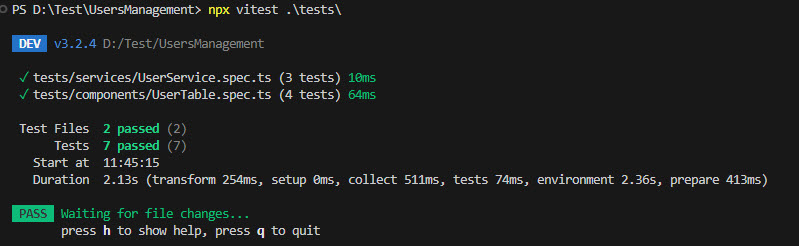
Now, we will execute all of our test cases. If any errors occur, we will fix them. The goal is to ensure that all test cases pass.
Bash
npx vitest .\tests\

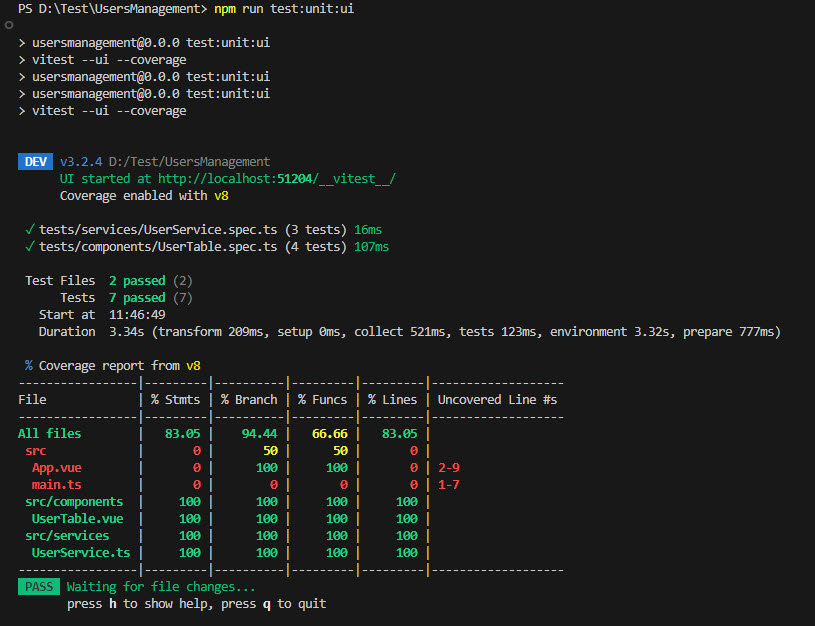
The test results for the two files are shown in the image below:


Measuring Your Test Coverage

Let's review the code coverage results. The closer the percentage is to 100%, the more comprehensive the unit tests are.
Bash
npm run test:unit:uinpx vitest .\tests\

The coverage results for the two source files are shown in the image below:


Conclusion

In summary, this article has guided you through writing unit tests for two Vue.js source files for a single feature using Vitest.
For official documentation, please refer here
I hope this guide will help you better understand this testing framework.
 

References

Ready to get started?

Contact IVC for a free consultation and discover how we can help your business grow online.

Contact IVC for a Free Consultation
View More
TECH

November 28, 2025

Deep Dive into Pattern Matching in ES2015

JavaScript has always been evolving, introducing new features to make coding more expressive, concise, and powerful. One of the most anticipated features slated for ES2025 is Pattern Matching — a powerful tool that enables developers to destructure and analyze data structures more intuitively and declaratively.

In this blog, we will explore what pattern matching is, how it works in ES2025, and walk through practical examples with detailed explanations.

Simple Literal Matching

const result = match ("hello") {
   case "hello" => "Greeting detected!";
   case "bye" => "Farewell detected!";
   default => "Unknown message"; };
console.log(result);
// Output: Greeting detected!

Explanation: The match expression compares the input string against each case. When it matches the string "hello", it returns the corresponding message.

Destructuring Objects

const user = { name: "John", age: 30 };
const greeting = match (user) {
   case { name, age } if age >= 18 => `Hello, ${name}. You are an adult.`;
   case { name } => `Hi, ${name}. You are a minor.`;
};
console.log(greeting);
// Output: Hello, John. You are an adult.

Explanation: Here, pattern matching destructures the object and applies a guard condition (if age >= 18) to decide which branch to execute.

Matching Arrays with Rest Patterns

const numbers = [1, 2, 3, 4];

const description = match (numbers) {
case [first, second, ...rest] => `First two numbers are ${first} and ${second}, rest are ${rest.join(", ")}`;
};
console.log(description);
// Output: First two numbers are 1 and 2, rest are 3, 4

Explanation: This example matches an array, capturing the first two elements into variables and the rest into another array using the rest pattern. It then constructs a descriptive string.

Nested Patterns

const response = {
status: 200,
data: {
   user: {
     id: 101,
     name: "Alice",
     roles: ["admin", "editor"],
   },
  },
};
const message = match(response) {
     case {
       status: 200,
       data: {
            user: {
            name,
            roles: [firstRole, ...restRoles]
           }
       }
     } =>
     `User ${name} has role ${firstRole} and others: ${restRoles.join(", ")}`;
     case {
       status
     } => `Request failed with status ${status}`;
};
console.log(message);
// Output: User Alice has role admin and others: editor


Explanation:
This example demonstrates matching deeply nested objects. The pattern matches a successful HTTP response and destructures nested properties to extract the user's name and roles.

Matching with Type Guards

function process(value) {
  return match (value) {
    case (x) if typeof x === "string" => `String of length ${x.length}`;
    case (x) if typeof x === "number" => `Number with value ${x}`;
    case (x) if Array.isArray(x) => `Array with ${x.length} elements`;
    default => "Unknown type";
  };
}
console.log(process("hello")); // Output: String of length 5
console.log(process(42)); // Output: Number with value 42
console.log(process([1,2,3])); // Output: Array with 3 elements

Explanation: This example uses guards (if conditions) within pattern matching cases to handle different types dynamically.

Matching Enums or Tagged Unions

const shape = { kind: "circle", radius: 10 };
const area = match (shape) {
     case { kind: "circle", radius } => Math.PI * radius * radius;
  case { kind: "square", size } => size * size;
     case { kind: "rectangle", width, height } => width * height;
  default => 0;
};
console.log(area); // Output: 314.1592653589793sfsdfsfsfs


Explanation:
 This example matches on the kind property of a shape object to compute areas for different shapes, demonstrating how pattern matching can elegantly replace switch-case statements handling tagged unions.

Caveats & Current Status

The Pattern Matching proposal is still evolving as part of TC39 discussions. While the syntax and features showcased here reflect the current proposal drafts, they may change before final inclusion in ES2025. Developers should keep an eye on official updates and consider using transpilers or experimental flags if they want to experiment early.

Conclusion

Pattern Matching in ES2025 promises to be a game-changer for handling complex data structures with clarity and brevity. It combines destructuring, conditional logic, and expressive syntax to help developers write cleaner, more maintainable code.

As JavaScript continues to evolve, embracing new paradigms like pattern matching will empower developers to solve problems more elegantly. Keep an eye out for this feature’s release and try experimenting with it once available!

[References]

Ready to get started?

Contact IVC for a free consultation and discover how we can help your business grow online.

Contact IVC for a Free Consultation
View More
TECH

November 26, 2025

AI API – When APIs Start to Think

For the past few weeks, I feel like I'm seeing the term "AI APIs" everywhere.

People are using them to generate content, summarize text, figure out if a customer review is happy or angry, or even... write code. I haven't actually tried one myself yet, but after reading around, I just kept wondering, "Wait, what's the actual difference between these and the traditional APIs I use every day?"

So, I did a little digging, and here's a quick brain dump of what I've learned so far.

I. What is an AI API, Anyway?

As far as I get it, an AI API is basically a hotline to a pre-trained AI brain.

Instead of calling a traditional API to ask, "Hey, give me the JSON for user ID 5," you call an AI API and ask, "Hey, read this paragraph and tell me what it means." It doesn't just return static data; it returns something that has been processed and thought about.

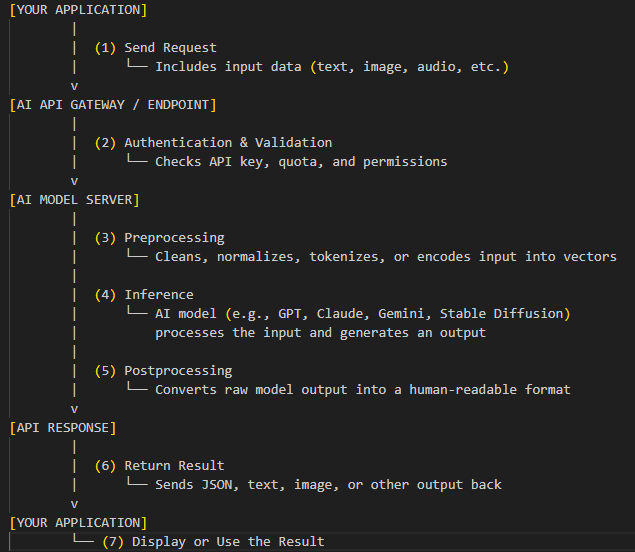
How it works:


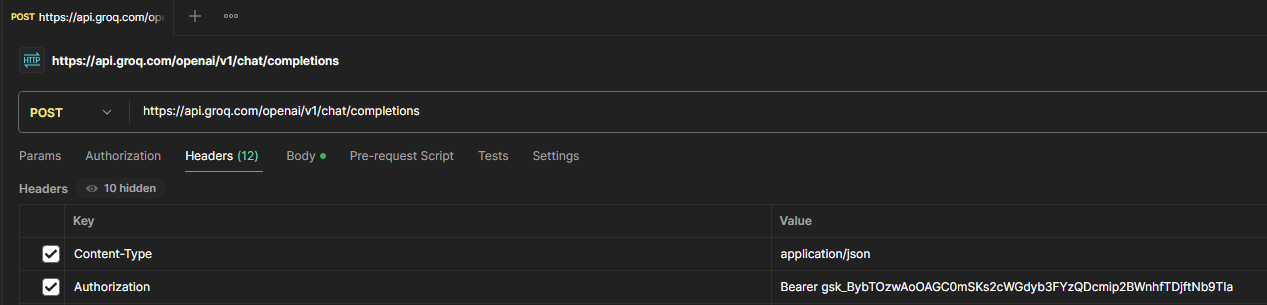
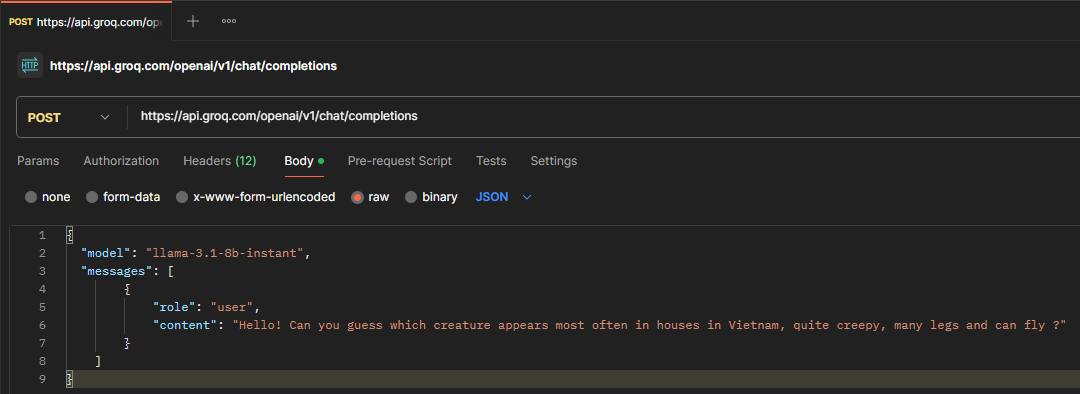
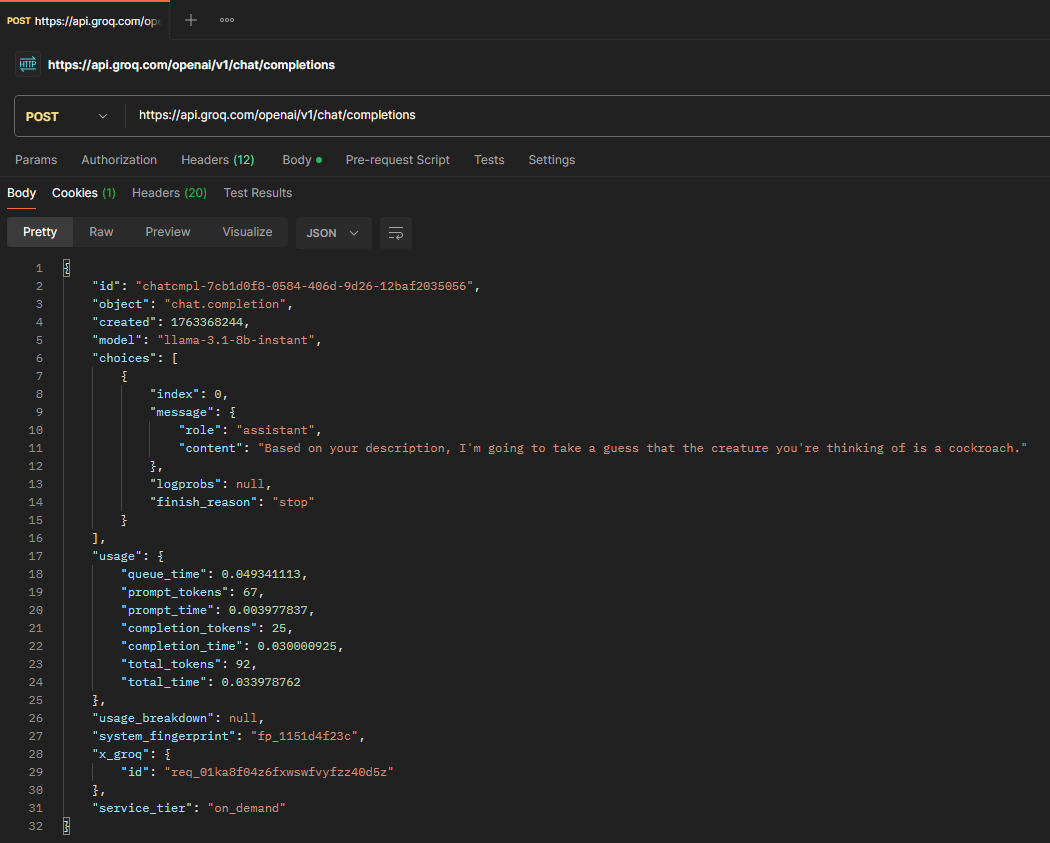
To make this more concrete, I decided to create my own example using Groq’s llama-3.1-8b-instant model and Postman.

  • In Postman, I set up a POST request to: https://api.groq.com/openai/v1/chat/completions
  • Add a header Content-Type with the value application/json and Authorization with the value Bearer YOUR_API_KEY (replace YOUR_API_KEY with your own API key).

  • Then I asked  a question in BODY: "Hello! Can you guess which creature appears most often in houses in Vietnam, quite creepy, many legs and can fly ?"

  • Finally, I received the answer from AI like this "...guess that the creature you're thinking of is a cockroach.". Wow, it’s completely accurate with exactly what I wanted to ask! I really scare this insect.

As you can see, I just need to send a question, and the AI will respond in natural language, making it feel like a conversation rather than a dry query.

II. Advantages of AI APIs

After looking at a few examples, I'm starting to see why people are so hyped:

  • Smarter results: You can give it an instruction like, "Write a friendly email," instead of coding a bunch of templates and rigid rules yourself. It gets your intent.

  • Leaner code: It looks like one good "prompt" could replace hundreds of lines of if-else logic. For example, instead of writing insane regex to parse an address, you just tell the AI, "Get me the address from this text."

  • Super-fast prototyping: I can imagine spinning up a Proof-of-Concept (PoC) in an afternoon instead of spending months trying to train my own model.

  • Natural responses: The text it returns sounds human, not robotic. Users would probably love this for chatbots.

III. Challenges

    Of course, nothing's perfect. Browsing forums, I see other devs seem to complain about the same stuff:

    • Unpredictable results: This is my biggest worry. The same input can give you slightly different results. What if it "gets creative" and just makes something up that's wrong?

    • Slow and expensive: Big AI models need big servers to run. A request can take several seconds (not milliseconds), and the costs can apparently stack up fast if you're not careful.

    • Privacy nightmares: This one's obvious. You're sending your (or your customers) data to a third-party service. You have to be really careful about what you're sending.

    • Debugging sounds awful: If a traditional API gives you a 500 error, you can check the logs. But if an AI gives you an answer that sounds right but is factually wrong, how do you even start to fix that?

    Clearly, there's a trade-off. We're swapping control and reliability for convenience and... well, magic.

    IV. Popular AI APIs to Explore

    If you want to start digging in like me, these are the "hot" names I've seen mentioned most:

    • OpenAI (GPT-4o / GPT-4o-mini): The big one, seems to be the standard for general reasoning.

    • Anthropic (Claude): I hear this one is great for creative writing and handling huge amounts of text.

    • Hugging Face (Inference API): The place to go if you want to tinker with open-source models.

    • Cohere API: Looks like it's more focused on business/enterprise tasks like summarization.

    • Google (Gemini API): Google's model, which is apparently a beast at multimodal stuff (text, images, and audio all at once).

    Most of these have free tiers to play around with, so I'll probably sign up for one soon just to see what it's like.

    V. Conclusion

    I'm still just learning, but one thing is clear: AI APIs mark a major shift in how we think about APIs.

    They don't just deliver data. They interpret it.

    And maybe... just maybe... that's where backend development is quietly heading. A future where logic feels more like conversation than computation.


    Whether you need scalable software solutions, expert IT outsourcing, or a long-term development partner, ISB Vietnam is here to deliver. Let’s build something great together—reach out to us today. Or click here to explore more ISB Vietnam's case studies.

    [References]

     https://treblle.com/blog/best-ai-apis?utm_source=chatgpt.com

    https://www.codiste.com/generative-ai-api-integration-challenges-solutions-real-world-example?utm_source=chatgpt.com

    View More
    OUTSOURCING

    November 25, 2025

    Fintech Development Outsourcing: The Ultimate Guide for 2026

    Outsourcing fintech development has become a strategic move for financial organizations seeking innovation, agility, and cost efficiency. As the fintech market continues to grow in 2025, more companies are leveraging specialized partners to accelerate product launches, ensure regulatory compliance, and stay ahead of digital transformation trends.


    But how do you choose a reliable outsourcing partner? What are the risks and opportunities?


    This guide will walk you through the latest market data, the pros and cons of fintech development outsourcing, key factors to consider when selecting a partner, and actionable steps for successful collaboration.


    Whether you’re a startup or an established financial institution, use this guide to make informed decisions and unlock new growth with outsourced fintech solutions.


    Market Trends and the Rise of Fintech Outsourcing

    fintech development outsourcing

    The fintech market is booming, and outsourcing is helping companies keep pace. This section highlights key trends and why fintech outsourcing is on the rise globally.

    What is Fintech Development Outsourcing?

    Fintech Development Outsourcing means delegating fintech software projects—like apps, payment systems, or compliance tools—to an external partner. These specialists bring deep domain knowledge, security expertise, and scalable resources to help you innovate faster and manage costs.

    US & Global Fintech Market Growth

    According to Fortune Business Insights, the global fintech market is projected to be worth USD 394.88 billion in 2025 and reach USD 1,126.64 billion by 2032, with a CAGR of 16.2% during the forecast period. (※1)

    Another report from Custom Market Insights estimates the market is projected to grow at a CAGR of 16.5% from 2025 to 2034, reaching USD 255.1 billion in 2025 and an estimated USD 1,008.56 billion by 2034.
    (※2)

    The global fintech market is growing rapidly due to digital and mobile banking, adoption of cloud computing, and API-driven open banking. Advances in AI, cybersecurity, and analytics are driving demand for new financial solutions. With rising competition, outsourcing fintech development to trusted partners is becoming essential to stay ahead.

    Why More Companies Outsource Fintech Development

    Many financial organizations are turning to outsourcing due to talent shortages in AI, data, and cybersecurity and the high costs of in-house development. Outsourcing also enables faster launches, scalable solutions, and access to global fintech expertise that would be difficult to develop internally.

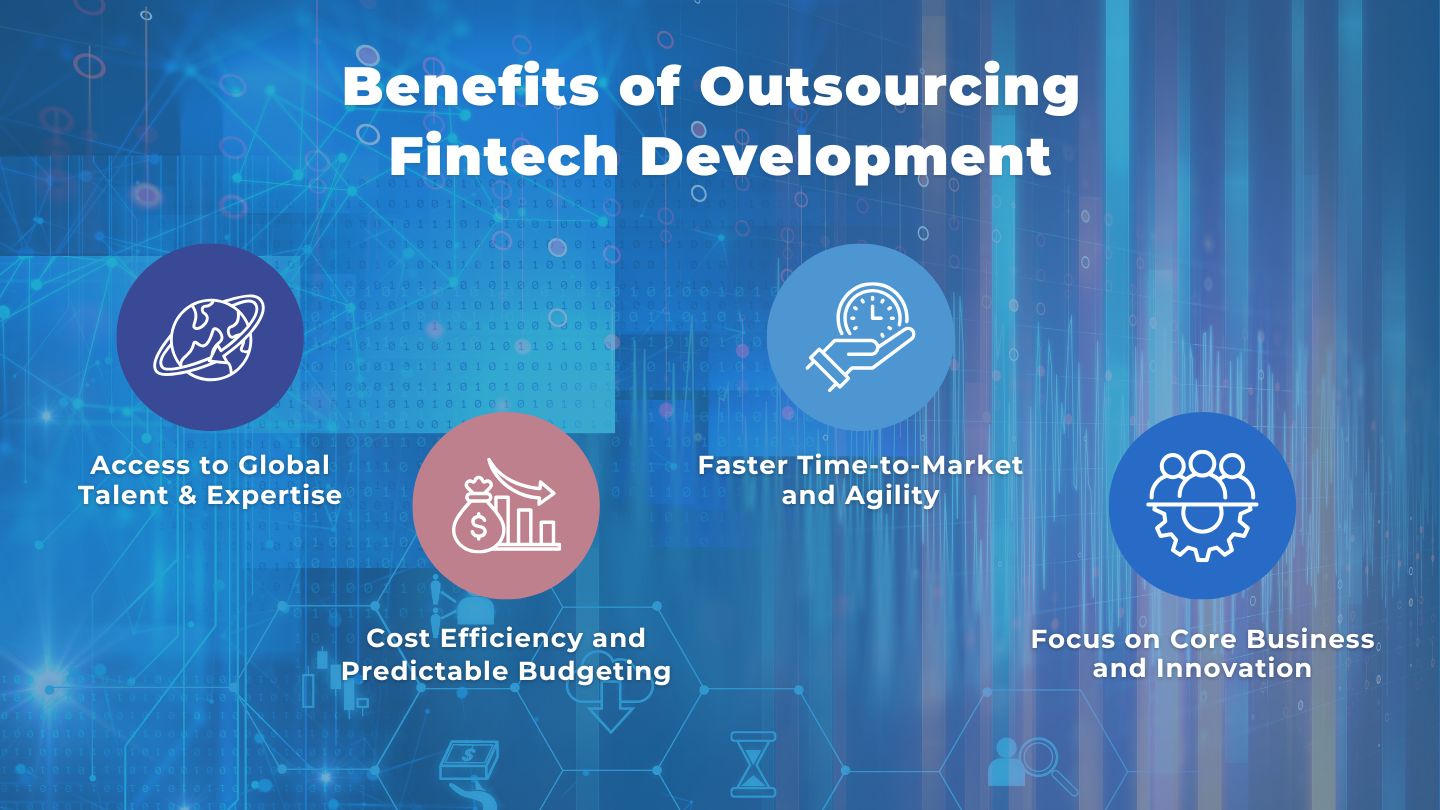
    Benefits of Outsourcing Fintech Development

    fintech development outsourcing

    Outsourcing fintech development enables financial firms to innovate faster, manage costs, and maintain a competitive edge.

    Cost Efficiency and Predictable Budgeting

    Outsourcing reduces overhead associated with hiring, training, and infrastructure, while offering fixed or flexible pricing models that support budget control.

    Access to Global Talent & Expertise

    Companies gain access to experienced fintech engineers skilled in payments, APIs, and secure system architecture without long-term hiring commitments.

    Faster Time-to-Market and Agility

    Dedicated outsourcing teams accelerate project delivery and help businesses respond quickly to market changes and regulatory updates.

    Focus on Core Business and Innovation

    Internal teams can concentrate on strategic growth and innovation, while technical execution is handled by specialized partners.

    Key Services You Can Outsource in Fintech

    fintech development outsourcing

    Fintech outsourcing covers a wide range of services that help financial organizations modernize systems, enhance security, and deliver seamless digital experiences.

    Custom App & Software Development (Web/Mobile)

    Outsourced teams can design and build web or mobile applications tailored to specific financial services, from online banking platforms to investment and lending apps.

    Payment & Banking Solutions (Blockchain, AI, APIs)

    Specialized providers develop secure payment gateways, digital banking systems, and AI-driven automation tools. In addition to blockchain-based transaction security and API integrations with traditional financial systems, cryptocurrency solutions are also part of the broader fintech landscape.

    Regulatory Compliance & Data Security

    Outsourcing partners ensure that products meet key financial regulations such as GDPR, PCI DSS, and AML, implementing strong encryption and data governance frameworks.

    Integration, Cloud Migration & Maintenance

    Service providers also handle system integration, cloud migration, and continuous maintenance, ensuring scalability, uptime, and efficient performance across all digital platforms.

    Challenges and How to Overcome Them

    fintech development outsourcing

    While fintech outsourcing offers many advantages, it can present certain challenges, especially regarding security, quality, and communication. Here’s how to manage them effectively.

    Data Security & Compliance (GDPR, AML, etc.)

    Ensure partners meet global standards, conduct regular audits, and maintain transparent data practices. Strong data encryption, secure cloud environments, and continuous monitoring help prevent breaches and maintain customer trust.

    Quality Control and Project Management

    Set clear milestones, KPIs, and QA processes using Agile or DevOps frameworks. Regular progress reviews and automated testing ensure consistent product quality and faster issue resolution.

    Communication and Cultural Differences

    Select teams with strong English, overlapping work hours, and collaboration tools like Slack or Jira. Encouraging open communication and aligning on shared goals early reduces misunderstandings and builds long-term trust.

    IP Protection & Vendor Reliability

    Use NDAs, define IP ownership, and verify your vendor’s credentials before signing. Choosing partners with proven financial industry experience further safeguards proprietary technology and sensitive data.

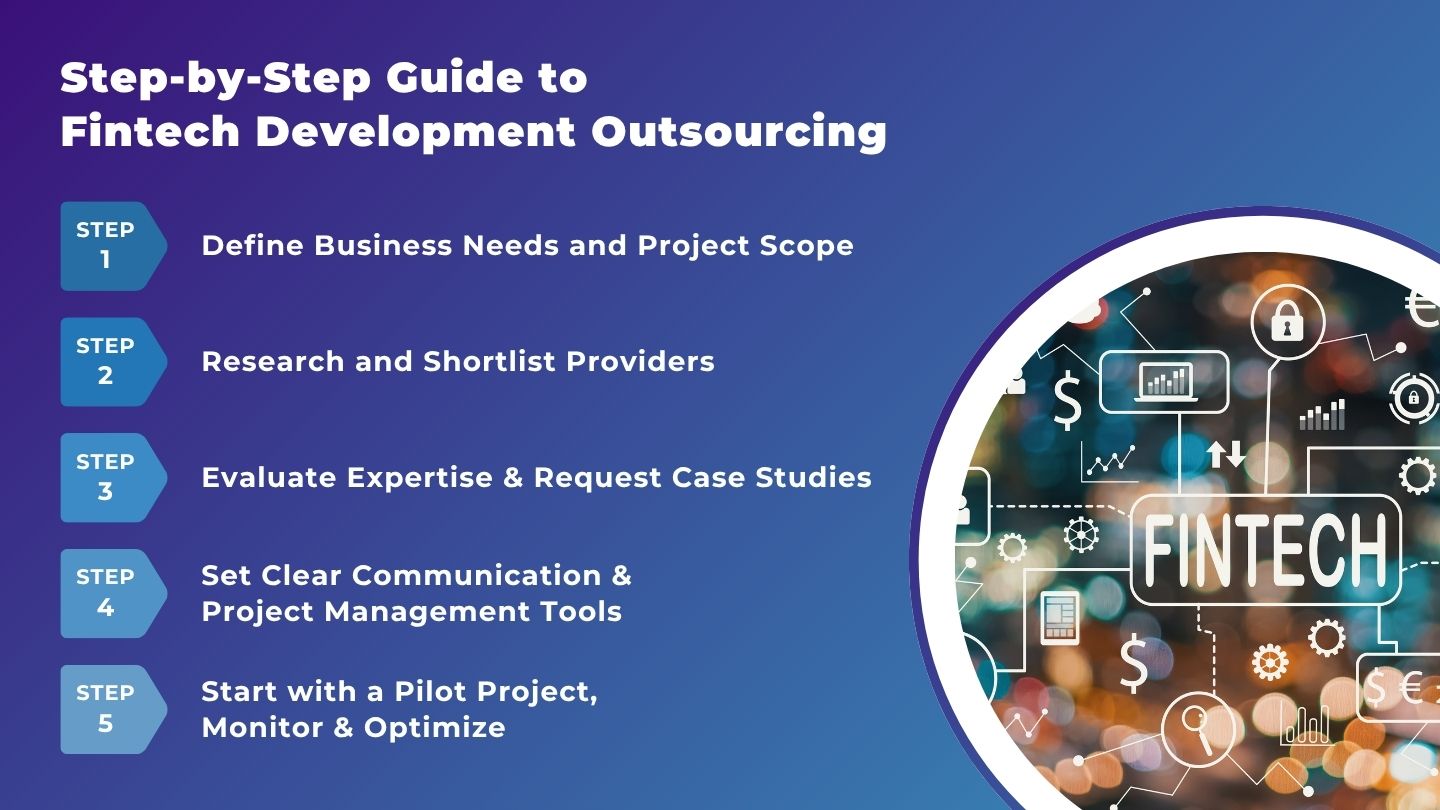
    Step-by-Step Guide to Fintech Development Outsourcing

    fintech development outsourcing

    A structured approach to outsourcing helps financial firms select the right partner, reduce risks, and ensure successful project delivery.

    Step 1: Define Business Needs and Project Scope

    The first step is to clearly outline the business objectives, target users, and the project scope. This ensures alignment between internal teams and potential outsourcing partners from the start.

    Step 2: Research and Shortlist Providers

    Identify and compare potential providers based on their fintech experience, technical expertise, and client references. Shortlisting helps focus on the partners most likely to meet project requirements.

    Step 3: Evaluate Expertise & Request Case Studies

    Review each provider’s past projects and request detailed case studies. This helps assess their capabilities, problem-solving approach, and relevance to your specific fintech needs.

    Step 4: Set Clear Communication & Project Management Tools

    Agree on communication channels, reporting schedules, and project management tools such as Slack, Jira, or Trello. Establishing these early prevents misunderstandings and keeps the project on track.

    Step 5: Start with a Pilot Project, Monitor & Optimize

    Begin with a small pilot project to evaluate collaboration, delivery speed, and quality. Monitor progress closely and optimize processes before scaling up to full development.


    For organizations seeking a long-term fintech partner, ISB Vietnam (IVC) provides expertise in legacy modernization, core banking portals, and scalable solutions.

    Contact us today to learn more and explore collaboration opportunities.

    Ready to scale your fintech vision?

    Let’s collaborate to build secure, scalable, and future-ready fintech solutions.

    Contact IVC for a Free Consultation

    Case Studies: Successful Fintech Outsourcing Projects

    fintech development outsourcing

    ISB Vietnam (IVC) develops professional applications for the Japanese financial market, covering banking, stock trading, and foreign exchange systems. Our teams are skilled in developing detailed specifications and delivering high-quality fintech solutions through secure, scalable, and modern architectures.


    Beyond Japan, ISB Vietnam (IVC) also supports fintech development for clients in Southeast Asia and other international markets, providing scalable and secure solutions tailored to regional compliance requirements.


    Bank Account System Package Maintenance

    Updating and maintaining design documents in Japanese based on the source code of local bank account systems.
    Language: COBOL

    Foreign Exchange System

    Monitoring order status changes and real-time transaction updates in the forex market.
    Languages: Java, JSP, JavaScript (AJAX), Oracle 10G

    Other Development Examples:

    • AI-Powered Legacy Code Modernization
    • Core Banking Web Portal Development
    • Periodic Batch Processing Systems for Banking Operations

    Looking to accelerate your fintech innovation?
    From legacy system transformation to next-generation banking platforms, we support financial enterprises aiming for innovation, compliance, and long-term growth.
    Contact us today to explore collaboration opportunities.

    Ready to scale your fintech vision?

    Let’s collaborate to build secure, scalable, and future-ready fintech solutions.

    Contact IVC for a Free Consultation

    Frequently Asked Questions

    fintech development outsourcing

    Outsourcing fintech development often raises important questions about cost, security, and project management.

    Below are key FAQs that help financial organizations make informed decisions when partnering with a fintech development vendor.

    How much does it cost to outsource fintech development?

    Fintech development outsourcing costs typically range from $30,000 to over $300,000, depending on project size and complexity. Basic apps with simple functions are cheaper, while advanced features like AI insights or fraud detection raise costs.(※3,4)

    Conduct thorough research and obtain multiple quotes to ensure the best value. Partnering with vendors in cost-effective regions like Eastern Europe, Southeast Asia, or Latin America can further reduce expenses.

    Which fintech services are best to outsource?

    Services like payment solutions, compliance tooling, mobile/ web apps, and legacy modernization are commonly outsourced due to their need for specialised expertise.(※5)


    How can you ensure data security?

    Security is critical when outsourcing fintech development, as applications handle sensitive data like account and transaction details. Choosing partners with strong security practices, clear contractual obligations, open communication, and regular audits helps protect customer data and mitigate risk.

    What are best practices for cross-border project management?

    Effective cross-border fintech outsourcing requires clear governance, overlapping work hours, and robust collaboration tools. Setting milestones and KPIs while considering cultural and language differences ensures smooth project execution and successful outcomes.


    Ready to take your fintech project to the next level?


    Partner with ISB Vietnam (IVC) A trusted software development company with deep experience in banking, finance, and digital transformation.

    Contact us today to discuss how we can help you build secure, scalable, and future-ready fintech solutions.

    Conclusion

    fintech development outsourcing

    Fintech development outsourcing can serve as a strategic advantage, helping financial companies accelerate innovation, reduce costs, and access specialized expertise.

    While ISB Vietnam (IVC) does not work with cryptocurrency, we have extensive experience in legacy system modernization and core banking solutions.


    For organizations looking to strengthen their fintech capabilities and build a long-term relationship with a reliable technology partner, contact IVC today to explore how our expertise can support your next project.

    Ready to scale your fintech vision?

    Let’s collaborate to build secure, scalable, and future-ready fintech solutions.

    Contact IVC for a Free Consultation


    Reference

    Data and insights in this article are based on the following sources:

    External image links

    • All images featured in this article are provided by Unsplash, a platform for freely usable images.
    • The diagrams used in this article were created using Canva.       
    View More
    1 6 7 8 9 10 25
    Let's explore a Partnership Opportunity

    CONTACT US


    At ISB Vietnam, we are always open to exploring new partnership opportunities.

    If you're seeking a reliable, long-term partner who values collaboration and shared growth, we'd be happy to connect and discuss how we can work together.

    Add the attachment *Up to 10MB