For the past few weeks, I feel like I'm seeing the term "AI APIs" everywhere.
People are using them to generate content, summarize text, figure out if a customer review is happy or angry, or even... write code. I haven't actually tried one myself yet, but after reading around, I just kept wondering, "Wait, what's the actual difference between these and the traditional APIs I use every day?"
So, I did a little digging, and here's a quick brain dump of what I've learned so far.
I. What is an AI API, Anyway?
As far as I get it, an AI API is basically a hotline to a pre-trained AI brain.
Instead of calling a traditional API to ask, "Hey, give me the JSON for user ID 5," you call an AI API and ask, "Hey, read this paragraph and tell me what it means." It doesn't just return static data; it returns something that has been processed and thought about.
How it works:
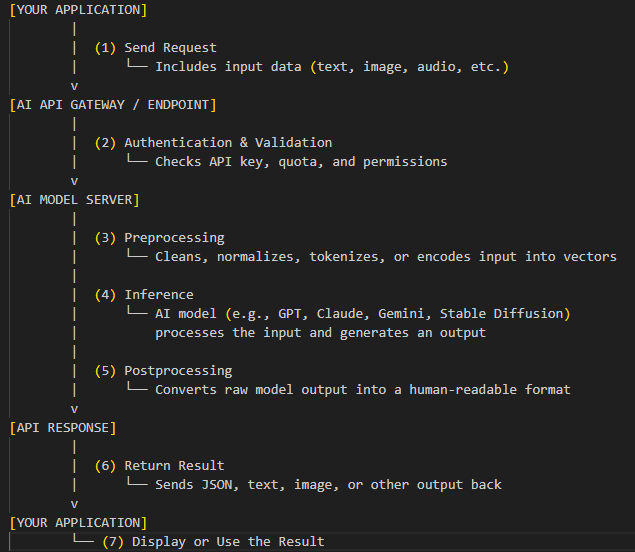
To make this more concrete, I decided to create my own example using Groq’s llama-3.1-8b-instant model and Postman.
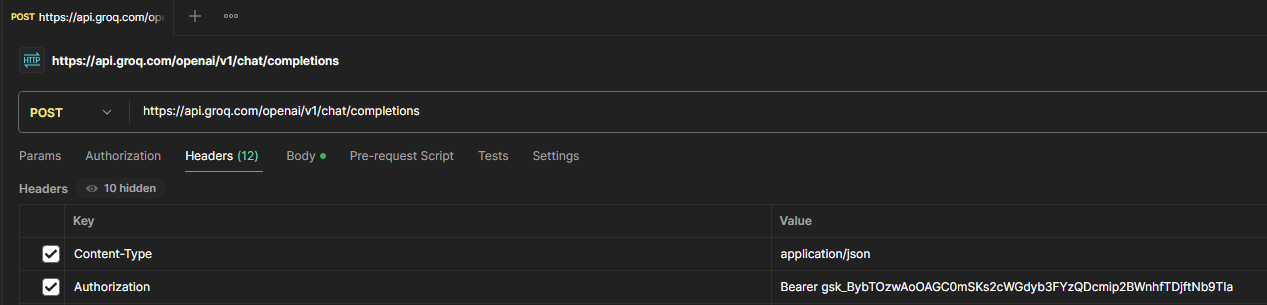
- In Postman, I set up a
POSTrequest to:https://api.groq.com/openai/v1/chat/completions - Add a header
Content-Typewith the valueapplication/jsonandAuthorizationwith the valueBearer YOUR_API_KEY(replaceYOUR_API_KEYwith your own API key).
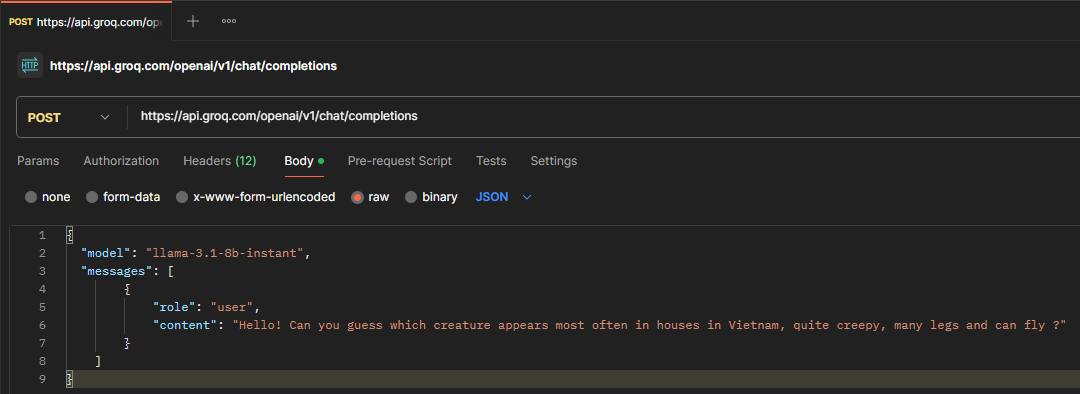
- Then I asked a question in BODY: "Hello! Can you guess which creature appears most often in houses in Vietnam, quite creepy, many legs and can fly ?"
- Finally, I received the answer from AI like this "...guess that the creature you're thinking of is a cockroach.". Wow, it’s completely accurate with exactly what I wanted to ask! I really scare this insect.
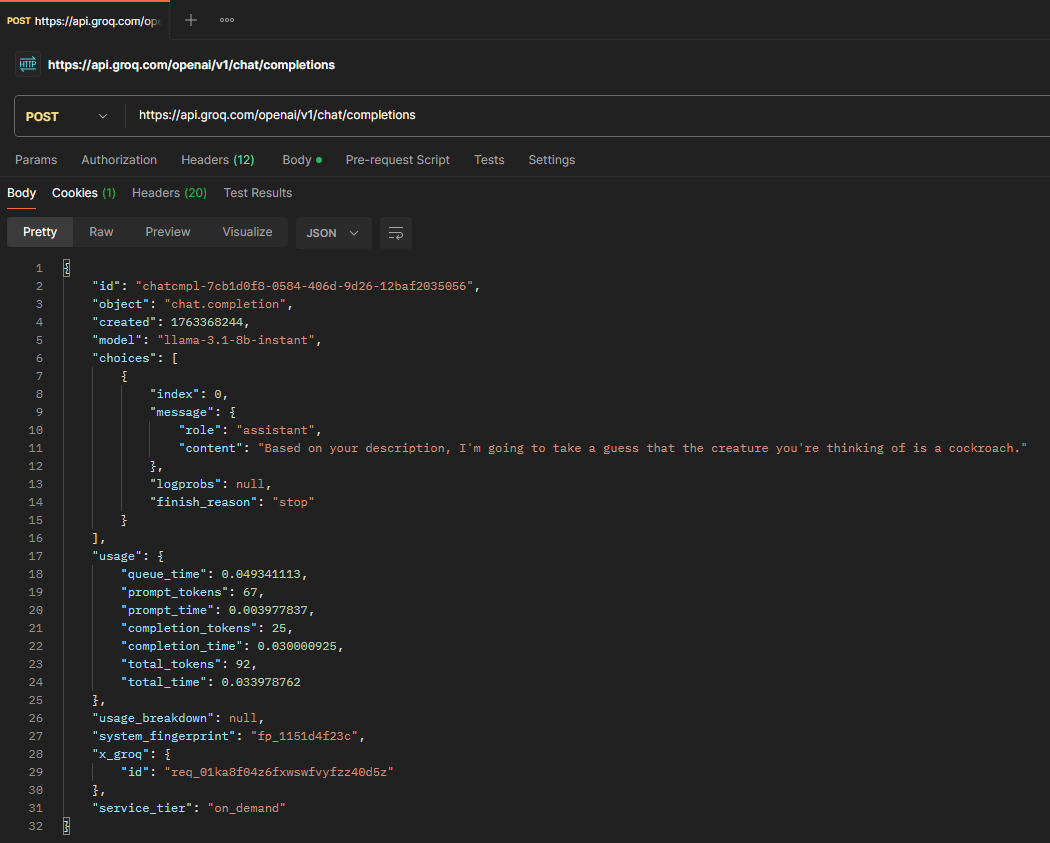
As you can see, I just need to send a question, and the AI will respond in natural language, making it feel like a conversation rather than a dry query.
II. Advantages of AI APIs
After looking at a few examples, I'm starting to see why people are so hyped:
-
Smarter results: You can give it an instruction like, "Write a friendly email," instead of coding a bunch of templates and rigid rules yourself. It gets your intent.
-
Leaner code: It looks like one good "prompt" could replace hundreds of lines of
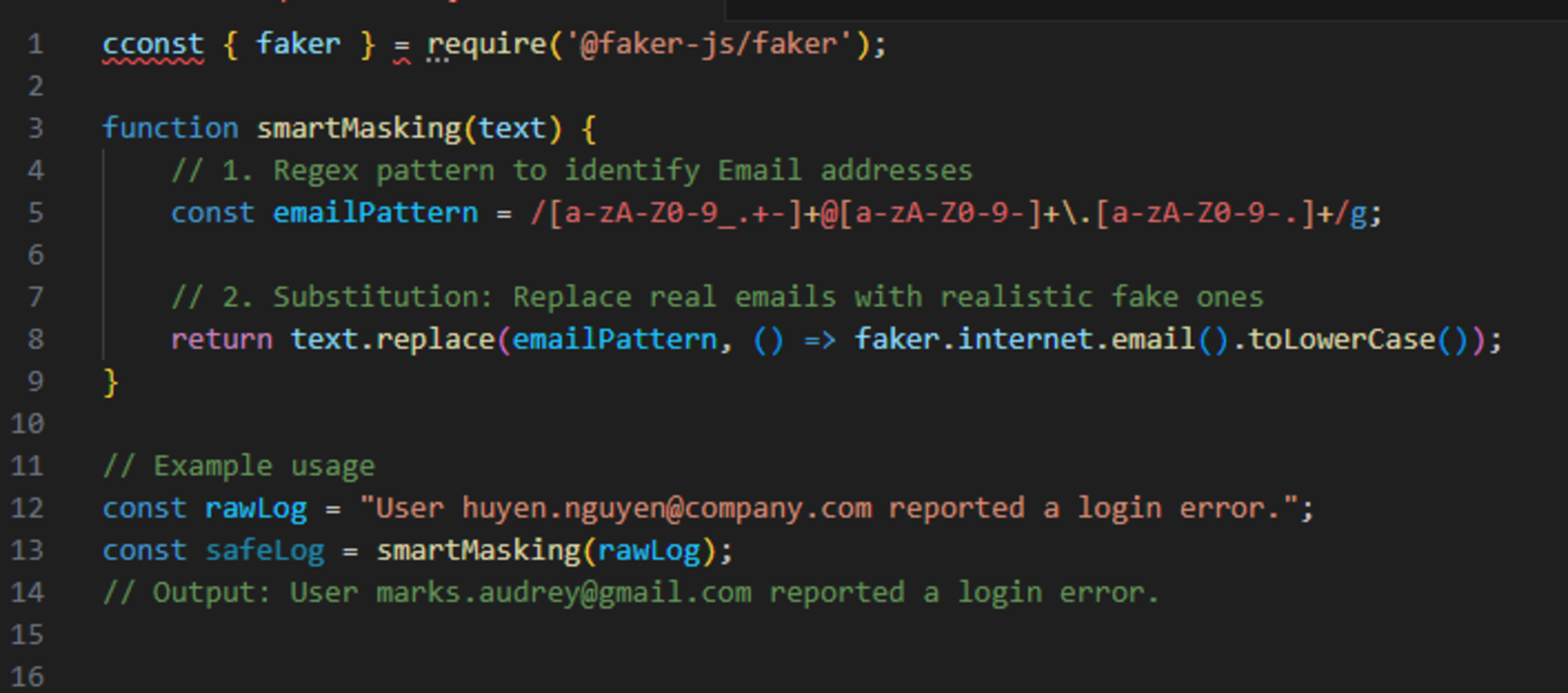
if-elselogic. For example, instead of writing insane regex to parse an address, you just tell the AI, "Get me the address from this text." -
Super-fast prototyping: I can imagine spinning up a Proof-of-Concept (PoC) in an afternoon instead of spending months trying to train my own model.
-
Natural responses: The text it returns sounds human, not robotic. Users would probably love this for chatbots.
III. Challenges
Of course, nothing's perfect. Browsing forums, I see other devs seem to complain about the same stuff:
-
Unpredictable results: This is my biggest worry. The same input can give you slightly different results. What if it "gets creative" and just makes something up that's wrong?
-
Slow and expensive: Big AI models need big servers to run. A request can take several seconds (not milliseconds), and the costs can apparently stack up fast if you're not careful.
-
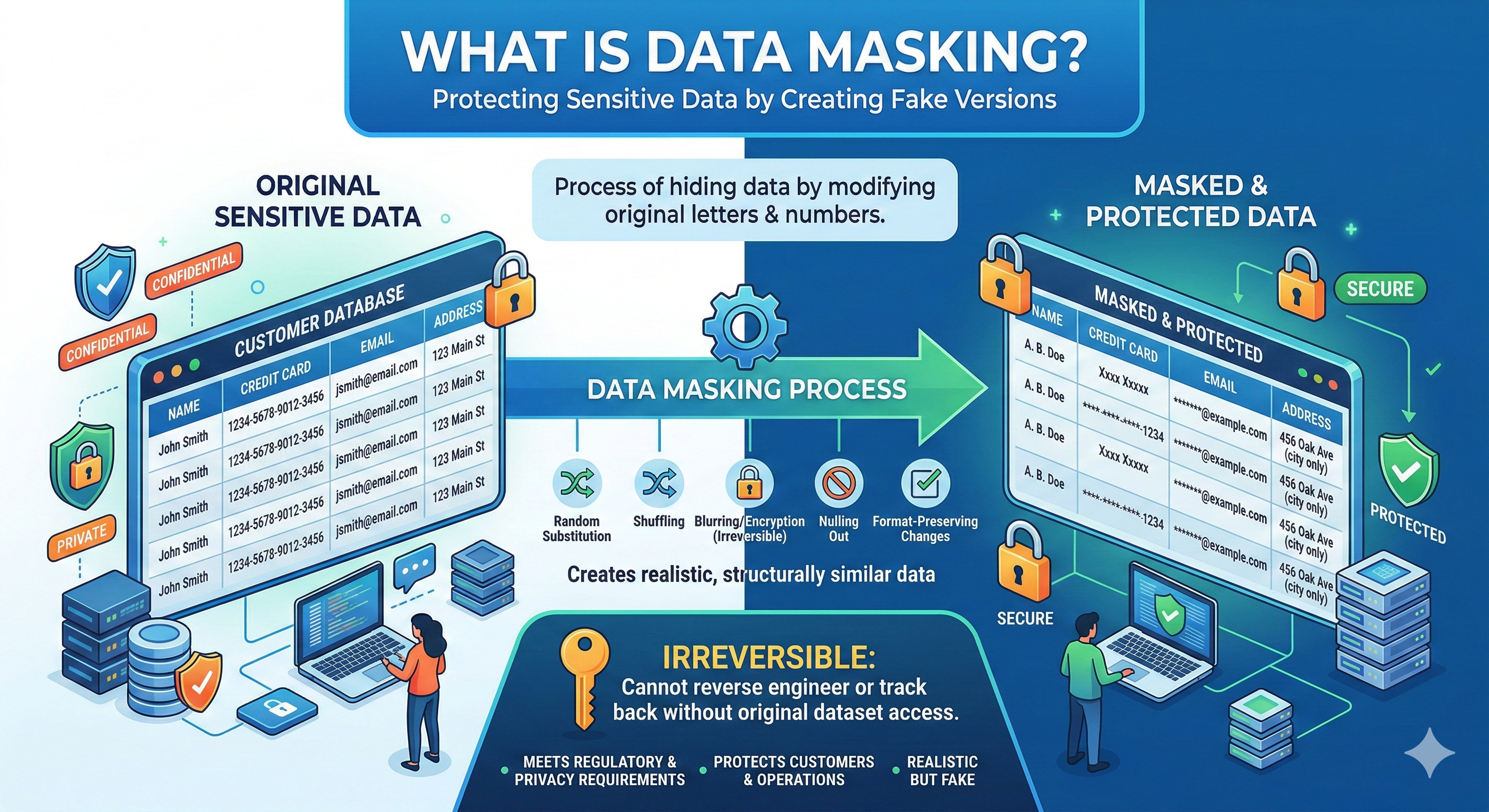
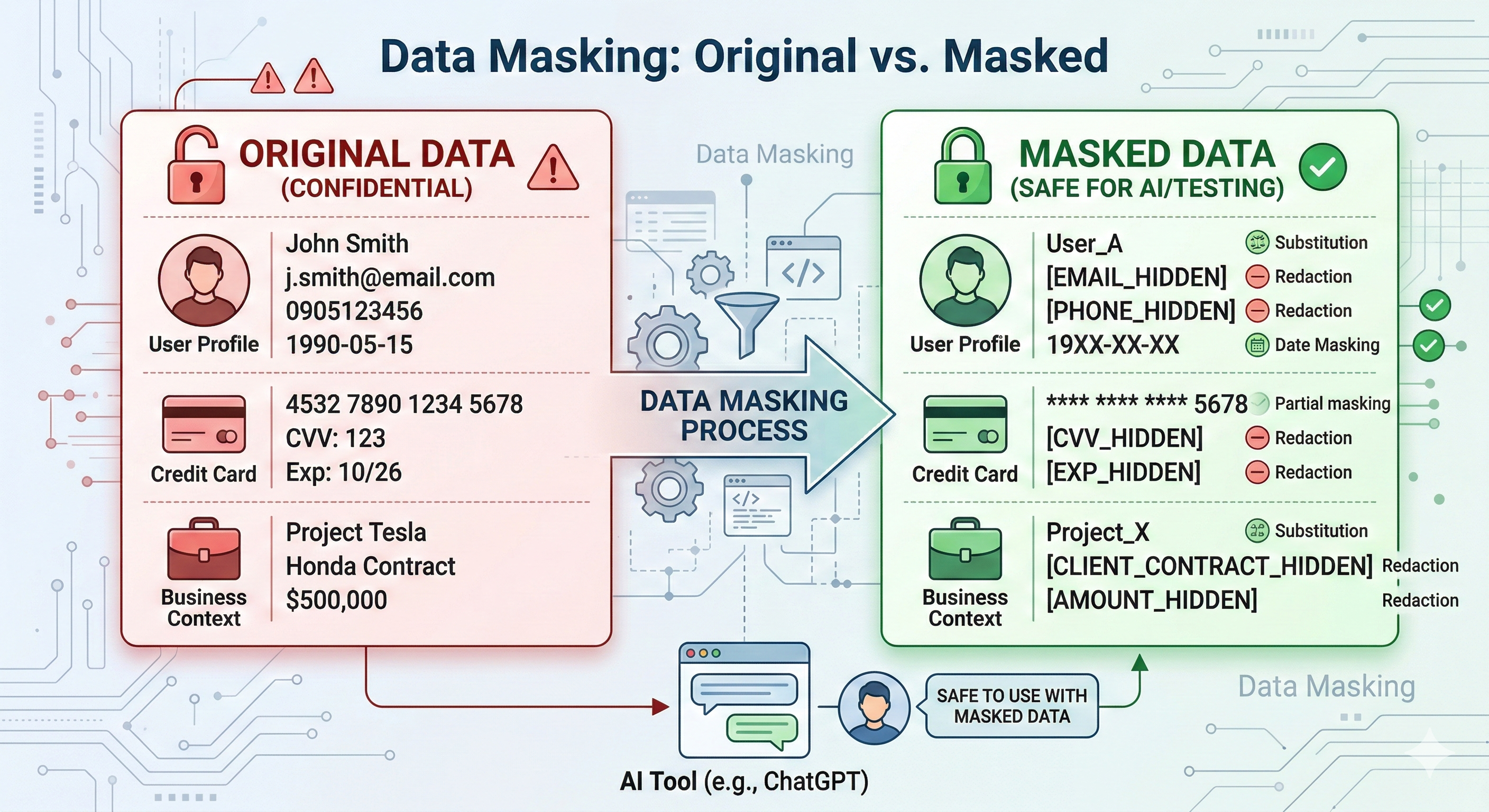
Privacy nightmares: This one's obvious. You're sending your (or your customers) data to a third-party service. You have to be really careful about what you're sending.
-
Debugging sounds awful: If a traditional API gives you a 500 error, you can check the logs. But if an AI gives you an answer that sounds right but is factually wrong, how do you even start to fix that?
Clearly, there's a trade-off. We're swapping control and reliability for convenience and... well, magic.
IV. Popular AI APIs to Explore
If you want to start digging in like me, these are the "hot" names I've seen mentioned most:
-
OpenAI (GPT-4o / GPT-4o-mini): The big one, seems to be the standard for general reasoning.
-
Anthropic (Claude): I hear this one is great for creative writing and handling huge amounts of text.
-
Hugging Face (Inference API): The place to go if you want to tinker with open-source models.
-
Cohere API: Looks like it's more focused on business/enterprise tasks like summarization.
-
Google (Gemini API): Google's model, which is apparently a beast at multimodal stuff (text, images, and audio all at once).
Most of these have free tiers to play around with, so I'll probably sign up for one soon just to see what it's like.
V. Conclusion
I'm still just learning, but one thing is clear: AI APIs mark a major shift in how we think about APIs.
They don't just deliver data. They interpret it.
And maybe... just maybe... that's where backend development is quietly heading. A future where logic feels more like conversation than computation.
Whether you need scalable software solutions, expert IT outsourcing, or a long-term development partner, ISB Vietnam is here to deliver. Let’s build something great together—reach out to us today. Or click here to explore more ISB Vietnam's case studies.
[References]
https://treblle.com/blog/best-ai-apis?utm_source=chatgpt.com