February 19, 2025
Onshore vs. Offshore: Definition, Differences, and Key Considerations
As businesses grow, they often face challenges and struggle with a lack of skilled workers, IT expertise, and industry experience. These gaps can hinder and slow operations down or make it harder to stay competitive in today’s digital world.
To bridge these gaps, businesses usually base their strategy on one of two basic models: onshore and offshore development. To put it in simple terms, onshore development refers to outsourcing software development or forming a development team based within the same country as the company, whereas offshore development means developing software or building development teams from other countries. Each strategy has its unique advantages and challenges, and the best choice will always depend on the nature of the work, considering factors such as cost, efficiency, quality control, and compliance.
This article will explore the definitions, meanings, and key differences between onshore and offshore development, with insights from ISB Vietnam, a company experienced in both models. By the end, you’ll have a better understanding of these approaches, helping you make more informed decisions.
What Is Onshoring? Definition and Meaning
Onshoring refers to the process of outsourcing business operations, predominantly software development and business process outsourcing (BPO), within the client company’s home country. The practice of software development through onshore outsourcing is called onshore development. Unlike offshoring, where hiring comes from other countries, onshoring provides the ability to leverage local talent with the built-in benefit of the company retaining operational control in its home country.
Main Benefits of Onshoring
The major advantage of onshoring is that language and cultural barriers are practically non-existent since it's all done within the same country. This eliminates miscommunication problems sometimes encountered in offshore development.
In addition, time-zone differences can be negligible or completely territory-free, allowing agile collaboration among teams. This comes especially handy when projects require constant updates, quick feedback, or rapid iterations.
Also, very relevant is compliance with local laws and regulations. Since all business activities happen under the same jurisdiction, corporations can ensure compliance with data protection laws, industry regulations, and corporate governance policies, etc. while reducing other legal and compliance risks.
What Is Offshoring? Definition and Meaning
Offshoring is the practice of outsourcing business processes to a foreign country, often to reduce costs, access specialized talent, or increase business scalability. Offshoring is the opposite of onshoring—while onshoring keeps operations domestic, offshoring leverages resources abroad. Similarly, when software development is carried out through offshore outsourcing, it is known as offshore development. This approach is widely used in software development and IT services, where companies seek cost-effective solutions without compromising on quality.
Main Benefits of Offshoring
The major reason for offshoring is to lower costs. When companies outsource work out to regions where labor costs and overhead are low, they can greatly save on labor and operational costs while sustaining high productivity.
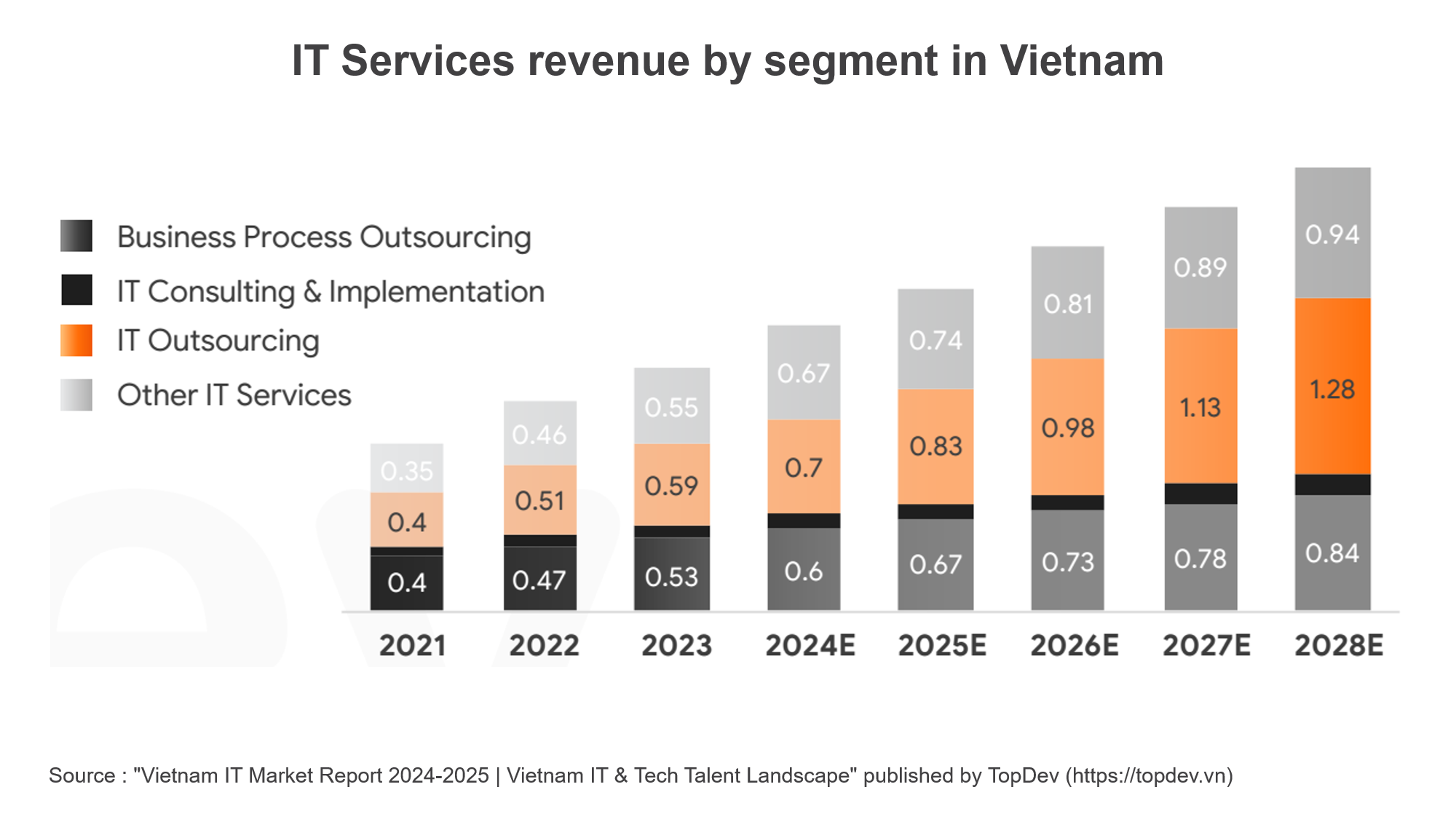
A further benefit is access to a large skilled professional base. Some countries specialize in IT and software development and provide highly skilled personnel at very attractive rates. For example, Vietnam is gradually developing into one of the leading offshore development centers due to the rapidly expanding pool of IT candidates, cost-effectiveness, and strong technical know-how.
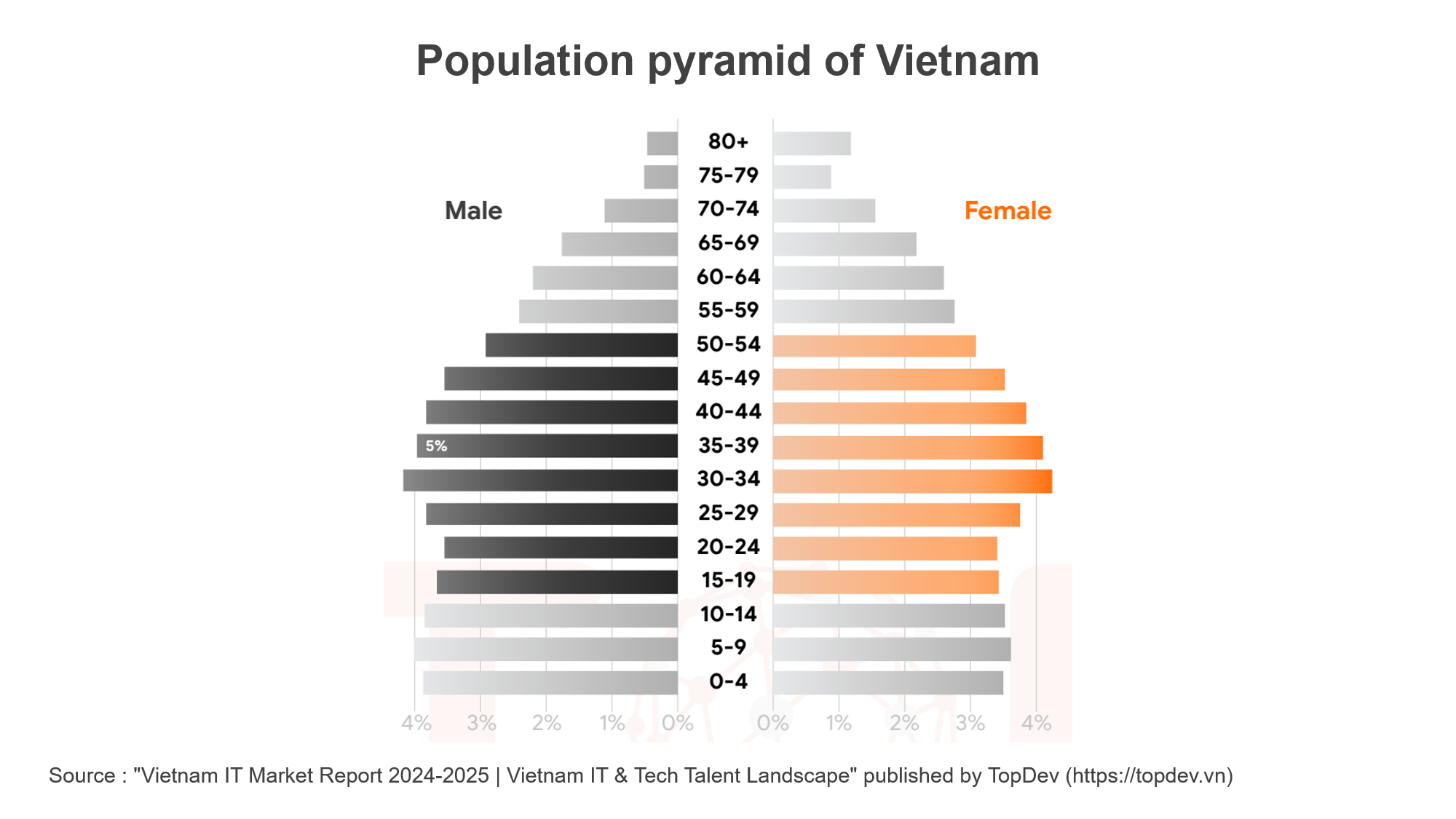
Vietnam has a huge and constantly growing pool of IT professionals, with over 500,000 already working in the IT sector and more than 50,000 students enrolling in computer science majors and it-related fields each year. This guarantees a vast, rich talent pool that clients can choose from as they seek solutions for software development and related services.
For more details on Vietnam's IT workforce and IT market trends, check out the following resources:
Key insights and trends for software developers in Vietnam 2024–2025
Onshore vs. Offshore: Key Differences and Considerations
Onshore and offshore development vary quite a lot in the context of costs, the place of providing services, communication supports, flexibility, and legal considerations. Understanding these differences will help businesses to opt for the most suitable model regarding software development or outsourcing. Below, we have touched the two models according to several important considerations.
Location
- Onshore: A client and the outsourcing provider are located in a similar country. Their proximity makes collaboration seamless, and in-person meetings can be possible as per need.
- Offshore: The outsourcing provider is in another country, which is often selected to save costs on labor or to find specialized talents. Offshore development is a popular choice for businesses looking to reduce expenses while maintaining high-quality service.
Cost
- Onshore: Hiring within a country normally comes with higher labor costs such as salaries, office space, and operational expenses. This form of outsourcing is more expensive due to the higher labor rates for IT professionals in developed nations.
- Offshore: Outsourcing to lower-labor-cost countries allows multiplying cost savings while still hiring well-trained professionals. Offshore companies are even more attractive for companies that are looking to gain maximum efficiency while maintaining a limited budget.
Communication
- Onshore: Since both the client and the development team speak the same language while being culturally more or less alike, communication becomes smoother, hence the ability to avoid misunderstandings. Besides, there are little or no time zone distinctions, allowing real-time collaboration.
- Offshore: The language barrier and cultural differences between clients and development teams can sometimes lead to challenges in communication, while working across multiple time zones can interrupt the constant flow of information. However, the time zone difference can also work in a company's favor by keeping the work going outside regular working hours and thus, completing a project faster.
Flexibility and Scalability
- Onshore: The pool of available talent is limited to the domestic market, which could create problems in any quick scale-ups or finding specific skills on short notice. In-country team expansion is costly and may take time.
- Offshore: By offshoring, organizations can exploit a global talent pool, enabling businesses to scale up or down rapidly according to project needs. This added flexibility is of particular advantage in large software development projects where specialized skills are necessary.
Legal and Regulatory Compliance
- Onshore: Since all operations are conducted in the same country, local laws and regulations are applied, thus posing fewer legal risks. In the event of any contract disputes, these can be handled under local law.
- Offshore: Companies are bound to comply with the laws and regulations of the provider's country, which may differ from those in their home country. Accordingly, compliance requirements can be more complex than their onshore counterparts. Nevertheless, by rounding up relevant factors such as intellectual property protection or labor laws well in advance, businesses effectively manage these workings and mitigate any corresponding risks.
Conclusion
Several key factors influence the decision between onshore and offshore development: cost, communication, scalability, and regulatory compliance.
Onshoring implies seamless collaboration, better compliance with the relevant local laws, and real-time interactions, making onshore development the right choice for businesses that need to monitor their projects closely and ensure continuous compliance with standards. Offshoring favors cost advantages, access to global talent, and scalability and thus can be ideal for companies aiming for high expertise and cost-effectiveness.
Both approaches have their respective advantages and disadvantages, and the establishment of one over the other is up to what the business considers first in that sense. In some cases, a hybrid approach—using both onshore and offshore development—may be one way to achieve a balance in terms of cost, quality, and efficiency.
A formal understanding of the differences between onshore and offshore development would allow a business to make informed decisions in accord with their growth strategies and mission.
The advantages and disadvantages of onshore and offshore development are explained in detail in the article below, so please take a look at this article as well.
Pros and Cons of Onshore and Offshore Development: Choosing the Right Model for Your Business Growth
About ISB Vietnam
At ISB Vietnam, a leading offshore software development outsourcing company in Vietnam, we’ve spent over 20 years helping companies worldwide navigate their IT requirements—offering not just skilled developers but also the high quality standards and language support that global projects demand.
If considering offshoring strategy or looking for a trusted partner to meet specifications for your organization's needs, we would like to show you our resources and expertise.
Contact us to find ways how to collaborate for your success or something.
Frequently Asked Questions (FAQ)
What is the origin of the terms Onshore and Offshore?
The origin of offshore is from marine, energy, and drilling industries, where it translates to “far from the shore” or “away from the coast”. It is often referred to in connection with "offshore drilling" (oil extraction at sea), "offshore fishing" (deep-sea fishing), and "offshore wind power" (wind farms in the ocean).
Over the years, the term started to be adopted into business: outsourcing operations into distant countries from their place of origin mainly for cost-cutting reasons. "Offshore" in this sense basically described business or development performed outside a company’s country, generally in low-cost zones. On the opposite, when operations are carried round within their home countries, they would be termed "Onshore."
What are the major features of offshore development in Vietnam?
Vietnam is one of the leading offshore development centers around the globe, attracting businesses worldwide.
One of the biggest advantages of Vietnam is the number of IT professionals and the labor cost-effective provision. There are about 560,000 IT professionals working in the tech industry at present. Every year, between 55,000 and 60,000 students enroll in IT-related fields. Furthermore, the average hourly rate of a software developer in Vietnam lies between $20 and $40, which is very cost-effective.
The Vietnamese government supports the development of IT talent at high national priority, with investments in tech education and the industry. This means that in coming years, offshore development in Vietnam is likely to be among the fastest-expanding ones worldwide.
For more insights into Vietnam’s IT workforce and outsourcing trends, refer to the following resources:
Key insights and trends for software developers in Vietnam 2024–2025
Top Software Outsourcing Companies in 2025: Find the Best Partner for Your Business
Why Outsource App Development? Key Benefits, Hidden Costs, and How to Get It Right